

Blood Sugar and Everyday Eating: Why the Whole Meal Matters
Rice is bad.
Fruit has too much sugar.
Never eat carbohydrates at night.
Millets are good.
Bread is bad.
Don’t eat bananas.
Eat this before that.
The conversation around blood sugar has become so filled with rules that ordinary eating can begin to feel like a chemistry exam.
Perhaps we can simplify it.
Instead of judging every food in isolation, start looking at the whole meal—and the whole lifestyle.
Understand Your Body
When we eat carbohydrate-containing foods, digestion converts much of that carbohydrate into glucose, which enters the bloodstream.
Insulin helps the body use and store that glucose.
That is normal physiology—not something we need to fear.
But the amount and type of carbohydrate, what we eat with it, our activity, sleep, metabolic health and other factors can influence our blood-glucose response.
This is particularly important for people with diabetes or prediabetes, who need individualized medical and nutritional guidance.
For everyone else, the broader lesson is useful:
Context matters.
A bowl of refined carbohydrate eaten alone isn’t nutritionally identical to a balanced meal containing vegetables, protein, fiber-rich carbohydrate and healthy fat.

Change What You Can
Before eliminating rice, roti, fruit or every food you enjoy, look at your overall pattern.
Are vegetables a significant part of your meals?
Is there protein?
How large are portions of refined carbohydrates?
Are sugary beverages common?
Do you move after eating?
Are you sleeping adequately?
Are highly processed snacks filling the gaps between meals?
This changes the conversation from:
“Can I eat rice?”
to:
“What does my overall meal look like?”
That’s a much more useful question.
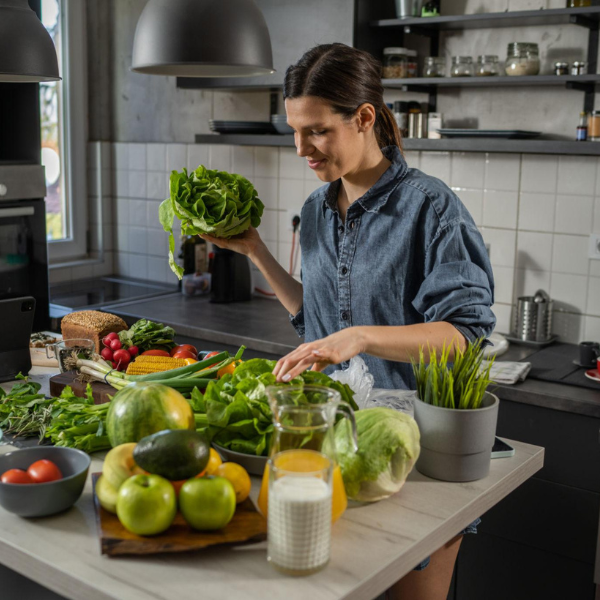
Eat to Support It
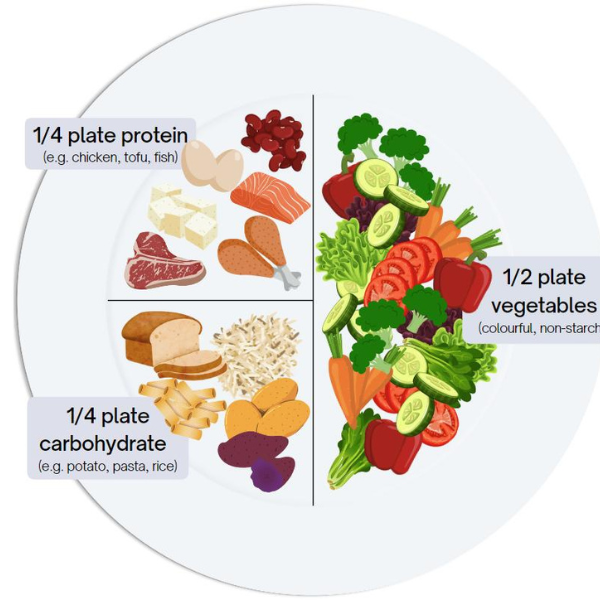
A simple plate framework can help.

Build the Plate
Approximately:
½ non-starchy vegetables
¼ protein
¼ carbohydrate-rich food
with healthy fats as appropriate.
That carbohydrate could be rice.
It could be roti.
It could be potatoes.
It could be quinoa.
It could be another grain.
The point isn’t that one carbohydrate is universally good and another universally bad.
Portion, processing, fiber, the rest of the meal and the individual’s health all matter.
An Indian Example
Instead of a large plate dominated by rice with a little curry:
Increase the sabzi.
Include dal, beans, paneer, egg, fish or chicken.
Have an appropriate portion of rice or roti.
Add salad or another vegetable where practical.

A U.S. Example
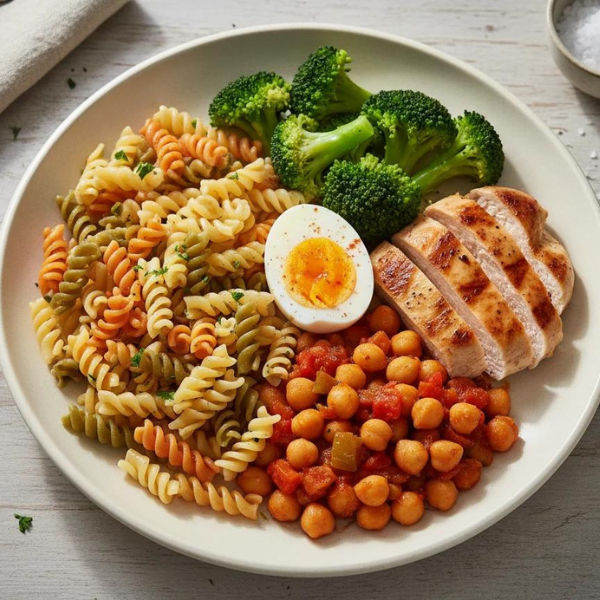
Instead of a large bowl of pasta alone:
Include a substantial serving of vegetables.
Add beans, fish, chicken, tofu or another protein.
Use an appropriate portion of pasta or another carbohydrate.
The idea is remarkably similar.
What About Fruit?
Whole fruit brings water, fiber and nutrients along with naturally occurring sugars.
That isn’t the same thing as drinking a large sugary beverage.
For most people, there is little reason to fear ordinary portions of whole fruit as part of a balanced eating pattern.
People managing diabetes may need more individualized guidance about portions, timing and medication.

Move to Strengthen It
Here’s one of the simplest lifestyle experiments:
Walk after a meal.
Muscles use glucose.
Regular physical activity improves metabolic health, and resistance training helps build metabolically active muscle tissue.
This gives us another reason to stop treating food as the only variable in blood-sugar health.
Nutrition matters.
So does movement.
So does muscle.
So does sleep.
So does overall body composition and health.

Use Products Where They Genuinely Help
This topic attracts an enormous number of products promising “blood sugar support.”
Be careful.
A supplement shouldn’t become permission to ignore the fundamentals.
Useful products may be much less glamorous:
a good pair of walking shoes;
resistance bands;
a kitchen tool that makes vegetable preparation easier;
whole-grain and minimally processed food choices;
or an appropriate glucose-monitoring device when medically indicated.
People diagnosed with diabetes should use monitoring devices, medications and supplements according to professional guidance rather than affiliate marketing.
No cinnamon capsule can compensate for an entire lifestyle.

Start Here This Week
Don’t ban carbohydrates.
Try changing their context.
Add vegetables to the plate.
Include protein.
Choose less-refined carbohydrate sources more often.
Watch portions.
Take a short walk after a meal when practical.
And if you have risk factors for diabetes or haven’t had appropriate screening, consider discussing it at your next healthcare visit.
Healthy eating doesn’t have to begin with fear.
It can begin with understanding how the pieces of the meal work together.
People with diabetes, prediabetes, hypoglycemia or other metabolic conditions should follow individualized medical and nutritional guidance. Medication should never be changed based on general wellness information.