The 3 Elements Every Product Page Must Have

The 3 Elements Every Product Page Must Have
The 3 Elements Every Product Page Must Have

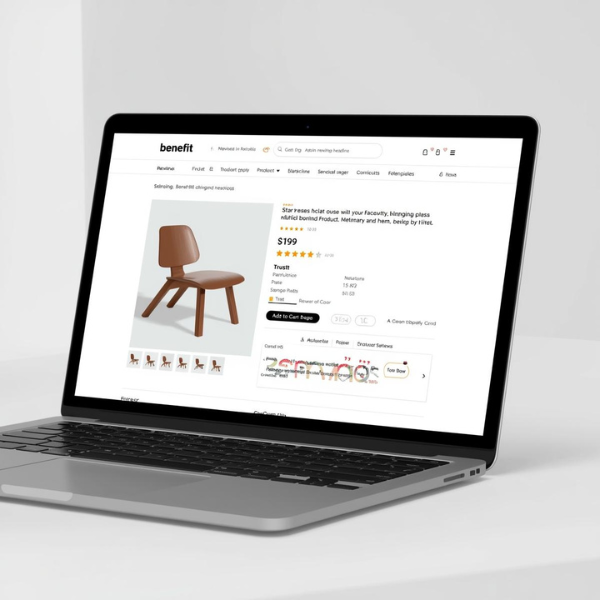
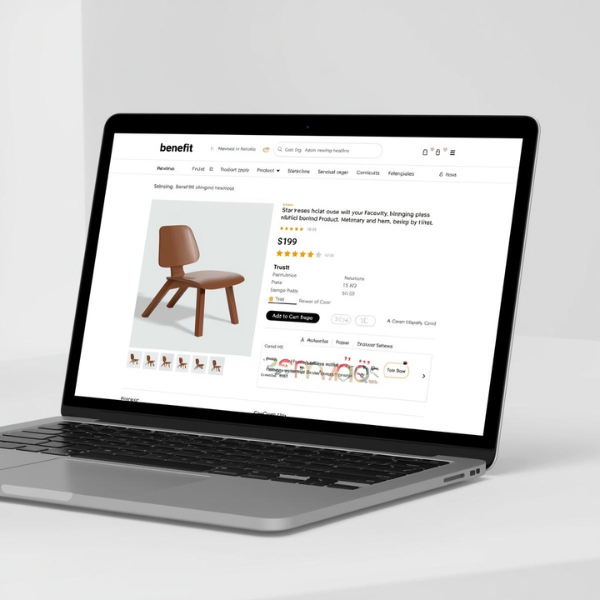
Product pages are often overlooked—but they’re where users make the decision. Here’s what to focus on.

Posted

Comment(s)

Elements:

  1. Story-driven headline and benefit-based subcopy
  2. Trust icons (reviews, guarantees)
  3. Visual hierarchy + CTA that feels natural

Takeaway:

Product pages should make people feel something, not just show something.

Why I Use Notion, Zapier & ChatGPT Together: A Streamlined Creative Stack

Why I Use Notion, Zapier & ChatGPT Together: A Streamlined Creative Stack

Why I Use Notion, Zapier & ChatGPT Together: A Streamlined Creative Stack

If you’re juggling creative work, digital consulting, and product-building (like I am), staying organized without losing your flow is everything. Over the last year, I’ve refined a system that works across platforms, people, and projects—built around three tools: Notion, Zapier, and ChatGPT.

This isn’t a “tech tutorial”—it’s a behind-the-scenes look at how I actually run things behind Crystal Multimedia and my brand projects in real time.

The Core Workflow

🧠 1. ChatGPT → Idea Drafting

I start here. Whether it’s a blog outline, product description, or UX headline variation, ChatGPT helps me go from blank page to first spark.

I’ll feed it a topic like:

“Create a week-long email series on energy-based skincare rituals for women over 40.”

Then I refine the voice and flow—without losing momentum.

🗂 2. Notion → Project Management & Archive

Everything gets stored and sorted in Notion:

  • Editorial calendars
  • Brand guides
  • Client deliverables
  • Swipe files for marketing copy
  • Affiliate product research

It’s not just organized—it’s beautifully browsable. That matters.

⚡ 3. Zapier → Automation Between It All

Zapier handles the glue:

  • New blog posts trigger email drafts in MailerLite
  • Form submissions go straight into Notion task boards
  • Product links get auto-logged into an affiliate tracker sheet

It removes the manual overhead without losing the personal touch.

Why This Trio Works for Me

  • It’s flexible enough for creative thinking
  • Structured enough to scale across multiple projects
  • Easy to delegate (I can loop in VAs without friction)

My Takeaway

If you’re a multi-hyphenate creative or consultant like me, the right tools won’t just help you stay productive—they’ll help you stay sane.

Want a peek inside my content calendar or automation setup?

Designing for a Global Audience: What I’ve Learned

Designing for a Global Audience: What I’ve Learned

Designing for a Global Audience: What I’ve Learned

In a world where your product might be used in Charlotte, Chennai, and Cairo on the same day, design isn’t just about clarity—it’s about cultural intuition.

Designing for a global audience means looking beyond device sizes and toward emotional norms, visual familiarity, and behavioral expectations.

What Global Really Means

It doesn’t mean “designing once and translating later.”

It means asking:

  • What assumptions are built into our UX?
  • Does our imagery, tone, or layout assume a Western cultural lens?
  • Is “minimalism” always better—or is it just familiar to us?

What I’ve Seen (and Adjusted)

🌐 1. Language is only the start.

Translation ≠ localization.
A button that says “Let’s Go” may sound motivating in one market—and aggressive in another. I’ve learned to slow down and ask: What does this tone feel like in context?

🧠 2. Space is perceived differently.

Western design leans toward white space and flatness.
In Eastern cultures, detail, vibrancy, and richness often feel more alive.
So I ask: Are we stripping away expression in the name of “clean”?

📱 3. Tech familiarity isn’t universal.

What’s intuitive to a Silicon Valley user may be confusing to someone new to mobile payments.
Designing for global access means we test for patterns—not just polish.

Tips for Building More Globally-Aware Digital Products

1. Design for Text Expansion

Always leave room in your UI for languages that require more space—German, Hindi, and Arabic can expand strings by 30–50%.

2. Use Universal Icons — But Validate Them

The “hamburger” menu isn’t intuitive everywhere. Neither is the “heart” for favorites. Test icon interpretation in your key markets.

3. Avoid Slang and Cultural References

“Crush your goals” or “Swipe left” may confuse or alienate users in non-Western markets. Keep language clear and culturally neutral—or tailor by region.

4. Plan for Right-to-Left Layouts

If you want to support Arabic or Hebrew, you’ll need to build in bidirectional layout support from the start.

5. Optimize for Local Performance Conditions

In areas with limited data or older devices, large images and animations can slow or block access. Use lightweight design practices.

6. Use Demographic Data to Guide Decisions

Study where your users are today—and where you want to grow tomorrow. What works in Tokyo may not land in Lagos.

Two Strategic Approaches to Consider

🧭 1. Localization-First Design

  • Start with your primary user base (based on demographics and behavior).
  • Deeply localize the experience—language, tone, layout, imagery.
  • Then scale by adapting region by region, building a library of modular, flexible design components.

✔ Best for: Regionally dominant apps, community-driven platforms, media or ecommerce with local nuance.

🌍 2. Universal Design with Language Flexibility

  • Design clean, culturally neutral interfaces
  • Use universal visuals, icons, and calls to action
  • Build with language support, accessibility, and visual clarity in mind

✔ Best for: Global SaaS tools, productivity apps, education platforms, early-stage products entering multiple markets at once.

What I Do Differently Now

  • Avoid defaulting to trends. Instead, I study how people interact—especially in underrepresented regions.
  • I question copy: “Is this tone universal—or just clever in English?”
  • I prioritize emotional neutrality + modularity so design can scale or localize when needed.

My Takeaway

Designing for a global audience is a chance to expand empathy—not just reach.
The goal isn’t to make one version that works for everyone.
The goal is to make everyone feel considered.

Want a design audit focused on global readiness? Or just want to share a moment you felt unseen by a product’s UX?

What Success Means to Me Now

What Success Means to Me Now

What Success Means to Me Now

There was a time when success meant momentum—more projects, bigger logos, inboxes full of invites.

And I loved it. Until I didn’t.

Where It Started

For years, I worked inside large financial firms, ran client projects, built platforms, pitched ideas, delivered results.

It was fulfilling. But also exhausting—because the metrics I was chasing didn’t always match what I actually valued.

The Shift

The change wasn’t loud. It came in quiet ways:

  • In the slow mornings where I journaled instead of rushing
  • In the joy of designing my own sites without external approval
  • In the spark of writing a chapter that no one commissioned—but that needed to be written

I realized success had become… something more internal.

What It Means to Me Now

  • 🌀 Feeling aligned with what I create
  • 🛠 Building systems that support freedom, not pressure
  • ✨ Helping others without compromising my own wellness
  • 📚 Finishing stories that live inside me

Success today feels like integration—between inner and outer, between giving and receiving, between ambition and surrender.

My Takeaway

We outgrow old definitions when we’ve lived them fully.
Now, success means resonance.
And the ability to choose joy without asking for permission.

What does success mean to you now? I’d love to hear your reflections.

📝 Comment on the post or Share your story

Beauty & Wellness: Free Radicals

Beauty & Wellness: Free Radicals

Beauty & Wellness: Free Radicals

A gentle, practical guide to oxidative stress—what it is, how it impacts visible aging and vitality, and the small daily habits that make a big difference.

Posted

Comment(s)

What are free radicals (in plain language)?

Free radicals are tiny, unstable molecules with an “unpaired” electron. They’re created naturally when we make energy and also come from the outside world (think UV rays, air pollution, smoke). Because they’re unstable, they try to “steal” stability from our cells—this can chip away at lipids, proteins, and even DNA.

Where they come from

  • Inside: normal metabolism, immune responses, intense exercise without recovery
  • Outside: UV/sun, air pollution, smoking/secondhand smoke, certain chemicals
  • Lifestyle: ultra-processed diet, high stress, poor sleep

Oxidative stress 101

When free radicals outnumber our antioxidants, we get oxidative stress. Over time, that imbalance can show up as dull skin, fine lines, slower recovery, and it’s linked with broader health concerns. Balance—not zero—is the goal.

Beauty: skin & appearance

  • Daily broad-spectrum SPF, shade/hat, and gentle cleansing
  • Topical antioxidants (e.g., vitamin C) and consistent hydration
  • Protein + colorful plants → building blocks + antioxidants for glow
  • Smart devices/routines that support a healthy skin barrier

When skin looks healthy, we feel more confident—that emotional lift matters.

Wellness: heart & metabolic health

  • Plate pattern: mostly plants (greens, beans, berries), quality protein, healthy fats
  • Movement: daily walking + 2–3×/week light strength & balance
  • Sleep & stress: 7–9 hrs, breathwork, prayer/meditation, sunlight in the morning
  • Routine labs & consults: partner with your clinician for personalized care

Emotional well-being

  • Protect your joy: gratitude notes, hobbies, music, nature time
  • Stay connected: friends, family, community—loneliness fuels stress
  • Learn & create: the brain loves novelty—try a new skill weekly

Your daily anti-oxidative game plan

  • Eat the rainbow: berries, citrus, leafy greens, tomatoes, turmeric, cocoa
  • Hydrate: water + herbal teas; go easy on alcohol
  • Move & recover: short walks after meals; stretch; sleep on a schedule
  • Skin routine: cleanse, antioxidant, moisturize, SPF—repeat
  • Reduce exposures: smoke, excess sun, harsh pollutants where possible

About tools & products

Food, movement, sleep, and stress care are foundational. Some people also choose targeted products that support skin clarity and overall vitality. Always choose what fits your needs and check with a healthcare professional if you have conditions or take medications.

Nimi’s Personal Picks

AgeLoc LumiSpa

2-in-1 cleansing and skin renewal device for smoother, brighter skin in just two minutes.

Nu Biome

Powered by pre- and post-biotics, Nu Biome helps reduce bloating and support a balanced microbiome for better digestion and visible vitality.

Collagen

Boost to support smoother skin, stronger hair and nails, and confident glow goals.